
The Hidden Cost of Overpricing Your Home
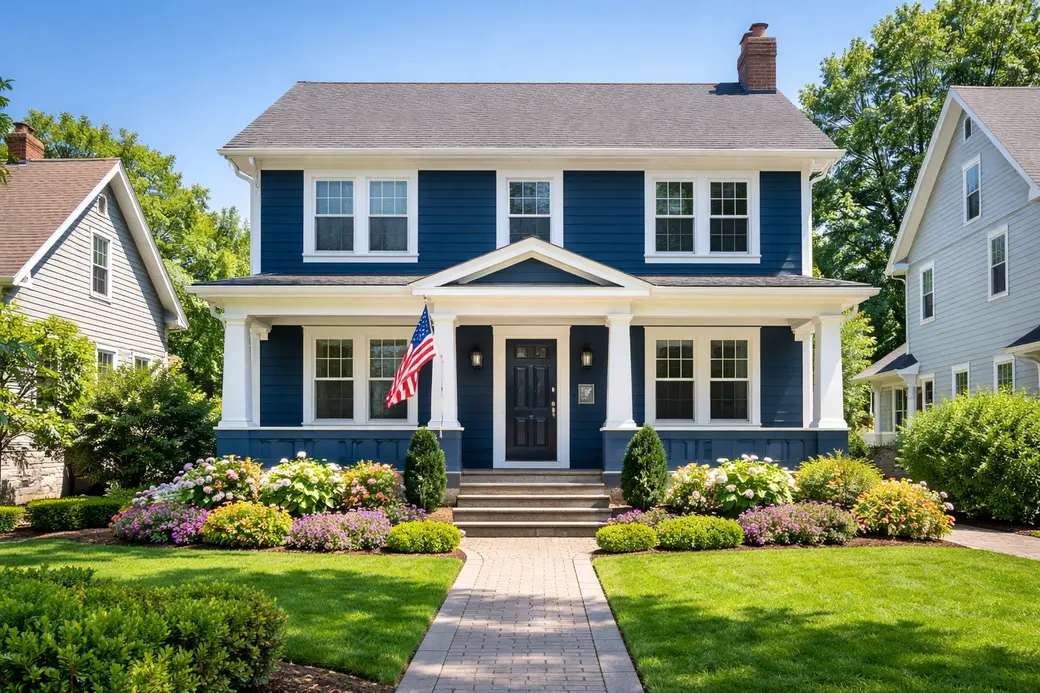
There’s a persistent myth in real estate that overpricing is a harmless starting point. List high, leave room to negotiate, and let the market “tell you” where the price should land. It sounds measured. Strategic, even. In practice, it’s closer to setting your own house on a slow, polite fire.
Overpricing doesn’t simply add time to a sale. It changes the entire risk profile of the transaction, often in ways sellers don’t see until they’re already negotiating from a weaker position.
The first and most immediate shift is who shows up. Pricing is not just a number; it is a filter. Buyers self-select based on perceived value, and when a home is priced above where the market quietly believes it belongs, the strongest buyers often don’t engage at all. They don’t write low offers to “test the waters.” They move on to properties that feel correctly positioned, where their effort has a higher likelihood of success.
What’s left behind is a smaller, less decisive pool. Buyers who may be stretching. Buyers who are curious but not committed. Buyers who are more inclined to negotiate aggressively because the price already feels misaligned. The seller hasn’t just reduced traffic; they’ve altered the quality of that traffic. And that is where risk begins to compound.
Time on market then starts to do what time on market always does: it reframes the narrative. Early days on market carry energy. Listings feel new, competitive, worth acting on. Once a property lingers, the conversation subtly shifts. Buyers begin to ask not “Do I want this?” but “What’s wrong with it?”
In markets like Cleveland, where buyers are engaged but increasingly disciplined, this shift happens quickly. Well-priced homes generate activity and, more importantly, confidence. Overpriced homes sit just long enough to invite skepticism, and that skepticism doesn’t disappear with a price reduction. It lingers, quietly influencing every subsequent showing and conversation.
By the time a price adjustment is made, the property is no longer being evaluated in a neutral environment. It’s being evaluated as a home that didn’t sell. That distinction matters. Buyers assume leverage, whether or not it objectively exists.
Then comes the negotiation phase, where overpricing reveals its most expensive consequences. Sellers often expect that a higher starting point will protect their bottom line. In reality, it tends to invite more aggressive negotiation behavior. Buyers who perceive a listing as overpriced are far more likely to push on inspections, request credits, and revisit terms later in the process. They’re not negotiating within a shared sense of value; they’re negotiating against a number they never believed in to begin with.
The irony is rather elegant. In trying to preserve room to negotiate, sellers often create conditions where they have less control over the negotiation itself.
Inspection periods become longer conversations. Minor issues become leverage points. Financing contingencies feel less secure. The deal carries more friction, more uncertainty, and a higher likelihood of falling apart before closing. Risk, in this context, is not theoretical. It shows up as renegotiation, delays, or contracts that never quite make it to the finish line.
Even when a sale does occur, the final outcome is often less favorable than it would have been with a sharper initial price. Not simply because of reductions, but because of the accumulated concessions made along the way. Credits, repairs, timeline adjustments, and soft terms all have a cost, even when they aren’t reflected in the headline sale price.
There’s also a quieter, less discussed risk: opportunity cost. While a property sits, the seller remains exposed. Carrying costs continue. Market conditions can shift. New competing inventory enters. Interest rates move. What began as a controlled pricing decision slowly becomes a variable the seller no longer fully manages.
Strategic sellers understand that pricing is not about optimism. It’s about positioning. The goal is not to test the market’s ceiling; it’s to align with where demand is strongest and most decisive. That alignment creates competition, and competition reduces risk far more effectively than a high starting number ever could.
This doesn’t mean pricing low for the sake of it. It means pricing with precision. Understanding how buyers are behaving in the current moment, not how they behaved six months ago or how one hopes they might behave tomorrow. It requires a certain discipline, and, occasionally, a willingness to resist the emotional pull of “just a bit higher.”
There is, after all, something deeply human about wanting to protect value. The challenge is recognizing that value in real estate is not preserved through distance from the market, but through alignment with it.
The most successful sales rarely feel dramatic. They feel efficient. Well-positioned homes attract serious buyers quickly, move through inspections with fewer surprises, and close with a level of certainty that is difficult to replicate once doubt has entered the process.
Overpricing, on the other hand, tends to create a transaction that is longer, noisier, and far less predictable. Not a disaster, necessarily, but a series of small disadvantages that accumulate until the outcome looks very different from what was originally intended.
Sellers often ask how to “leave room” in a deal. The better question is how to reduce the number of variables that can work against them. Price, when used correctly, does exactly that. It doesn’t eliminate negotiation. It simply ensures that negotiation happens from a position of strength, rather than quiet concession.
And in a market where perception shapes behavior as much as numbers do, that distinction is everything.
Categories
Recent Posts

GET MORE INFORMATION